

What is Kundan Jewellery? Its History, Meaning and Everything Else

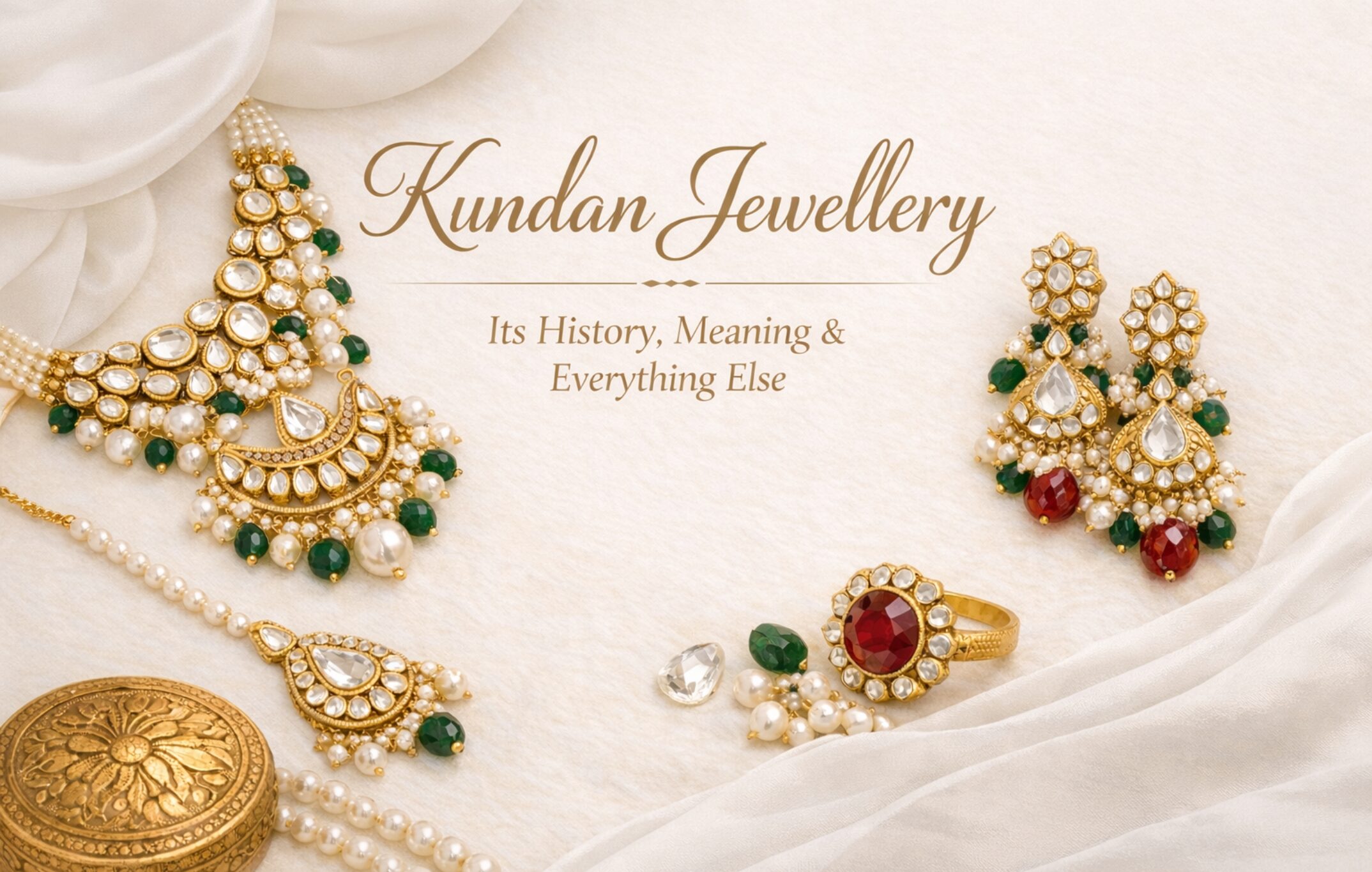
In India, there is a wide range of jewellery types, but many of them have been famous in certain regions and states, while others, such as gold and diamond jewellery, have an evergreen popularity. However, with the recent exposure of the internet and people being able to connect with the crafts of diverse states, we have been exposed to all types of jewellery.
Kundan jewellery is a newfound love amongst celebrities and brides, and the beauty of these pieces is truly captivating. It has been a cultural and traditional part of the royal courts of Gujarat and Rajasthan, and has dominated the jewellery space of these states for centuries. For those who have been seeing a sudden wave of kundan jewellery may think of it as a new addition to the craft, but it is just getting in front of the whole world.
If you, too, have been in complete awe of kundan jewellery and its enchanting beauty, knowing about its history, roots, evolution, and types is important to choose the right one for the right occasion. Let’s break down everything related to what is kundan jewellery today:
A Brief on What is Kundan Jewellery?
Obviously, before jumping into any other detail, it is important that you understand the core of what kundan jewellery is. Kundan refers to the specific types of stones or a glass piece which are of high quality and used in the making of traditional Indian jewellery. These stones are used in the base of gold and silver jewellery using a technique called “Kundankari,” in which a layer of a thin sheet of metal is applied, covering the stones to secure the jewellery.
This jewellery comes in almost all types and sizes, from necklaces to chokers, earrings, bangles, and even bridal sets. Another feature of kundan jewellery is that it is used in various types of alloys like copper and brass, which makes it available at an affordable rate.
History and Roots of Kundan Jewellery
If you are aware of the kundan jewellery and have read about it, then there are high chances that you have read quite a few versions, but we are sharing the common and widespread one. As per the legend, the history and the roots of the kundan jewellery date back to the 3rd century BCE in the royal courts of Rajasthan and flourished under the Mughal era.
The jewellery was commonly found in the wardrobes of the royals and was a staple in the state as bridal jewellery. Mughals too grew fond of the kundan stones, and Nizams used them to adorn a variety of pieces to make them exquisite and expensive, like spoons, hookah bases, bowls, and many other pieces. As initially made only in gold, it was accessible to the royal families because of its value, but slowly, with the art of imitation jewellery, it became accessible even for common people.
Art of Making Kundan Jewellery
As is obvious, kundan craft uses kundan stones in the making, and kundan stones are made out of glass stones like rubies, sapphire, emerald and others. The intricacy of making kundan jewellery requires skills and deep knowledge, and involves step-by-step craft. Let’s understand those steps:
- The first step is finalising a design because making kundan jewellery is unlike making other traditional jewellery and requires intricate motifs and patterns.
- As of today, kundan jewellery is made using precious and semi-precious stones like emerald, rubies, and diamonds and cut with precision.
- Sheets of pure gold, silver, or other alloys are cut into small pieces to make the base for using and putting the gemstones.
- After making the base, artisans put cut and polished kundan stones on the base and secure them with adhesive.
- Meanwhile, the base for jewellery is also created, which is different from the base made for kundan stones.
- The kundan stones attached to a base are then attached to the jewellery, which is known as a “jadau” technique.
- The concluding step is polishing the jewellery to enhance its beauty, shine, and finish.
Types of Kundan Jewellery
Though kundan jewellery originated as a luxury jewellery item in the royal courts of Rajasthan and Gujarat, royal kundan jewellery evolved a lot in the later years from becoming a favoured technique of designing diverse items to the modern-day affordable pieces. We will discover the most common and trendy types of kundan jewellery available in the market at present.
Traditional Kundan Jewellery
Undoubtedly, to begin with, we have the most common and raw form of kundan jewellery, which is the traditional kundan jewellery. It still holds the same value and designs from the time it was originated and oozes out luxury and grandeur. As a staple, these types feature uncut kundan stones made of diamond, rubies, sapphires, and emeralds and set in the gold-plated base. Another characteristic of the traditional kundan jewellery is the intricate meenakari work on the backside.
Meenakari Kundan Jewellery
Meenakari, as an individual work, has a long history and has been a core part of Rajasthan and traditional kundan jewellery, but seeing its appreciation, we now have a different version of meenakari kundan jewellery set. These jewellery features kundan, but more emphasis is made on the meenakari work in colourful enamel painting. To stand out, these kundan jewellery pieces have geometric patterns or floral patterns.
Polki Kundan Jewellery
Often treated as an alternative choice to kundan jewellery, polki jewellery also has a version of polki kundan jewellery. These pieces of jewellery have uncut diamonds, which are often raw and unpolished, unlike most of the kundan stones. Polki kundan jewellery is generally expensive and oozes grandeur.
Modern Day Kundan Jewellery
Modern kundan jewellery has a lot of variety and ranges from expensive to affordable rates. It evolved from using kundan stones made from diamonds, emeralds, rubies and precious stones to semi-precious stones like pearls, crystals and others. These are even made in affordable alloy sheets instead of gold, like silver, brass, and copper, making them easily available for everyone wishing to own a set.
How to Find a Real Kundan Jewellery?
Yes, at present, the market is flooded with a wide range of kundan jewellery, from luxury to inexpensive options. But, if you are looking for a real kundan jewellery made of high-quality kundan stones and a gold base, then there are certain criteria to find that you are getting a real one. We are sharing some of the most important ones for you to consider:
Hallmarks and Certifications
Like any real jewellery, from gold to diamond, even real kundan stone jewellery comes with hallmarks and certifications. When you are purchasing it from a reputed jeweller, you will be getting a certification mark showing its genuineness, and the same also shows that the jewellery has passed through the mandated and standard tests. A hallmark shows the purity level of stones and the base of the gold used in the making of the jewellery.
Check for the Gemstones
The original kundan jewellery stones are made using precious gemstones like diamonds, emeralds, rubies, and others, and it is a must that you check for the quality. Kundan stones are generally treated to bring out their shine, have no flaws, marks, or cracks, and are evenly cut. You must check for all these details and additionally ask for the certification, even for the stones.
Craftsmanship
Though the art of making kundan jewellery has become common these days, given that it is available at cheaper rates as well, a well-crafted and high-quality kundan jewellery will stand out in the craft. The real kundan jewellery will have intricate designs and motifs with meenakari work on the backside without any gaps or errors.
Check the Weight
As kundan jewellery is made using real gemstones, such as diamonds, emeralds, and other precious stones and is covered in gold foils, it generally is on the heavier side. You must check the weight by putting it in your hands and getting it weighed by the jeweller themselves. A real kundan jewellery will never be lightweight owing to the craft it uses.
Determine the Price
Kundan jewellery may come at a lesser price when compared to other authentic jewellery like gold, diamonds, and even polki, but it is not significantly low. When you are purchasing real kundan price, and everything seems genuine, unless the price is mentioned which you think is too low as per the standard, then it can be a sign that something is not right.
Purchase from a Reputed Brand
To avoid any fraud and possible scam while purchasing real kundan jewellery, it is always a wise choice to purchase it from a reputed seller. The chances of getting duped are almost nil, and you get certification and hallmarks without even asking for them.
Final Words
Kundan jewellery is rising in popularity in the current times because of its ethereal beauty and elegance. However, the initial art of making it in pure gold has evolved, and today we have a lot of versions of the kundan jewellery making it available for everyone. Even if you are aspiring to buy real kundan jewellery, you have ample things to go through, and this guide has explained everything in detail to make your purchase worthwhile. Before you go ahead to buy kundan jewellery, it is important that you know what is kundan jewellery, how to identify a real one and what other options you have.
FAQs
What is Kundan jewellery made of?
Kundan jewellery is made using glass stones, generally of diamonds, emeralds and other precious stones on a gold foil base. It also involves the meenakari artwork on the backside as a staple design.
Is Kundan expensive or gold?
The traditional kundan jewellery is expensive and is made of gold, but contemporary designs often feature less expensive bases like brass and copper.
What is the difference between gold and Kundan jewellery?
Gold jewellery is made entirely using the metal with intricate design, while kundan jewellery uses glass or gemstone as kundan for setting in the base made of gold and features a wax core to give it a unique and shiny appearance.
What is the difference between Kundan and Polki?
Kundan jewellery is famous for using glass stones on gold foil, which are often treated and evenly cut, whereas polki jewellery uses raw and uncut diamonds set in gold foil to achieve a raw look. Kundan jewellery, when compared with polki jewellery, is affordable, and polki jewellery often costs way more.
Is Kundan jewellery waterproof?
No, in most cases, kundan jewellery is not waterproof and must not be exposed to water. You should always keep it away from water exposure to retain its shine and longevity.
Is Kundan cheap?
Not precisely, kundan jewellery comes in almost every range, from 24 karat gold base and made using precious stones to cheaper versions of alloys like brass and copper for base and less precious stones. You can choose to spend on the cheaper version.
Is Kundan jewellery heavy?
Yes, even the real and traditional kundan jewellery can be heavy because the kundan stone is put on the gold foil and secured with adhesive before being put on the final base. The cheaper versions will always be heavy because of the weight of materials commonly used in the making of the base, like brass and copper.
Is Kundan a precious stone?
In individuality, kundan is not a precious stone, but the way the traditional kundan jewellery is made, using a gold foil base, makes the overall jewellery precious.
What is the purity of Kundan gold?
Most of the real kundan gold comes in 24 karat, which refers to 99.99% of purity.
What is the wax used in Kundan jewellery?
As a part and practice of traditional and real kundan jewellery, the wax used is a combination of antimony and shellac referred to as “pevdi” and “surmai.” The wax is used to create a sturdy setting for kundan stones in the gold foil setting.