

How to Clean Artificial Jewellery? Restore the Shine of Your Jewellery

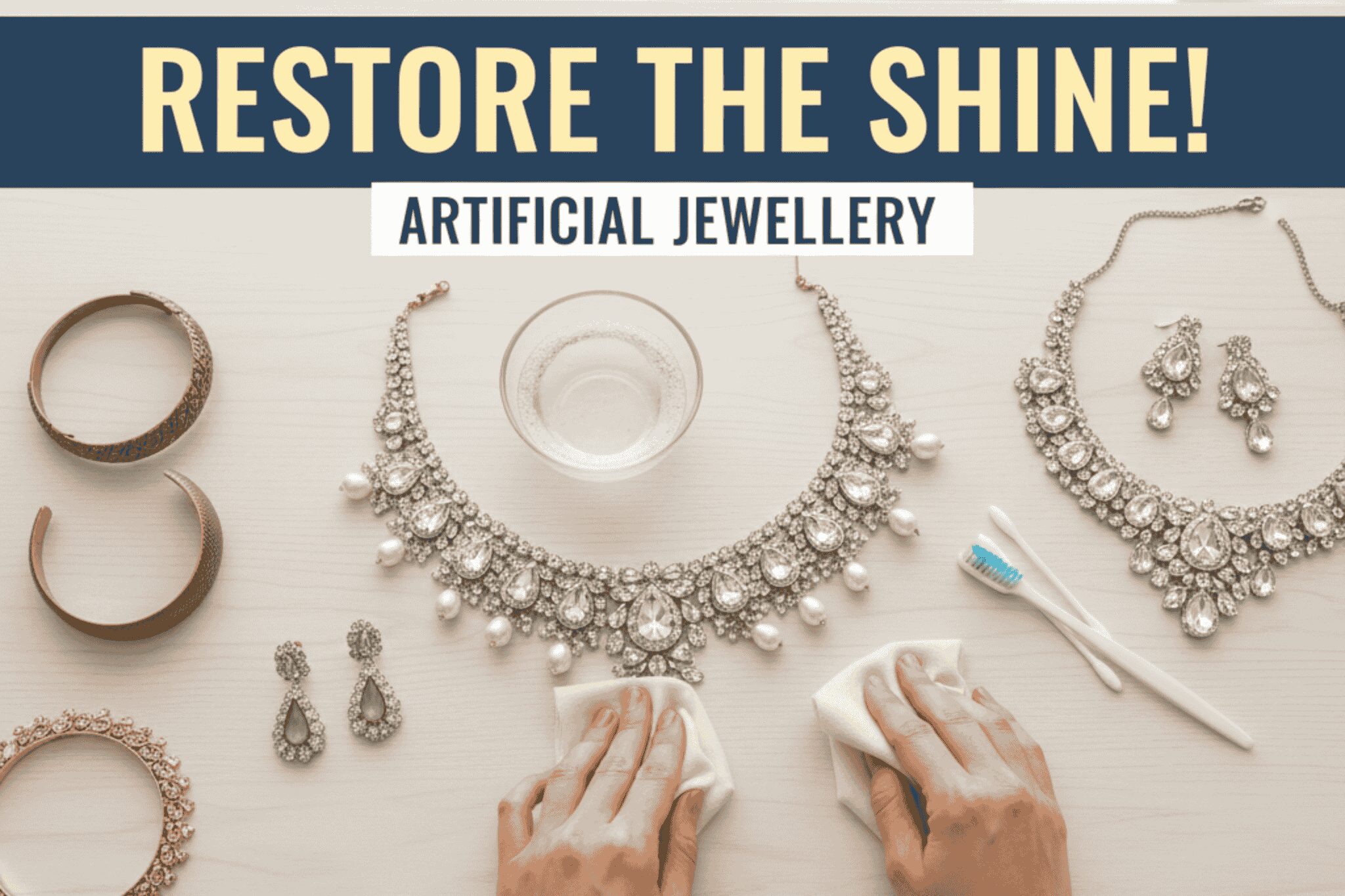
Despite gold and silver still ruling the jewellery space, artificial jewellery has gained immense popularity, and the reasons are quite obvious. With artificial jewellery, women now have an extensive range of designs to choose from, and that too at a very budget-friendly rate. One can now have a dedicated jewellery piece for every attire with no regret of overspending, and this has also given women the freedom to rise from the status fight that comes with wearing gold and silver jewellery.
However, one thing that is common with artificial jewellery is their tendency of getting tarnished and discoloured and with artificial jewellery, it is one of the demerits because it starts showing signs of tarnish and corrosion within a few uses. When compared to gold or silver, they show signs of discoloration quite early, but there is nothing to be worried about if you can restore their shine at home.
As there can be various reasons why your artificial jewellery loses its shine and charm, there are also various ways to restore it. If you have a box full of artificial jewellery, here are some of the best ways how to clean artificial jewellery at home. Let’s get started!
Best Ways to Clean Artificial Jewellery
Here we are sharing some tried and tested ways on how to clean artificial jewellery at home. Try these once before you think you need some professional assistance, or you are about to throw them.
Mild Dishwash Soap
Perhaps the easiest and safest method of cleaning your artificial jewellery at home is by using mild dishwashing soap. The process is straightforward and you need to take a bowl of warm water and add some dishwash soap in it. Once diluted well, add your jewellery in the solution and leave it for 10 to 20 minutes so the accumulated dust and grime start to soften.
After 10 to 20 minutes, use a gentle toothbrush and start brushing gently over the jewellery and put great focus on the corners. You will start seeing that the dust and grime start getting separated and the shine of the jewellery getting visible. Once done, rinse them with cold water and clean with a dry and soft cloth.
Lemon Juice
As lemon is naturally acidic, it works great in removing the oxide layer from the artificial jewellery. Take a bowl and add the same quantity of water and lemon juice in it and mix it well. Once done, put your artificial jewellery in it and leave it for 10 to 15 minutes to get soaked completely.
Start rubbing the jewellery after the given soak time with a rough cloth or a toothbrush, and after you see that the method is working and you have been able to take out the collected dirt from the jewellery, rinse it with cold water and dry it off with a clean cloth.
White Vinegar
It is by far the most tried and successful method of cleaning artificial jewellery, and the process is quite easy too. In a bowl, mix equal parts of white vinegar and water and add your jewellery to it. Soak it for 10 to 15 minutes, but if they have stone studded into them, reduce the soaking time and add a few drops of olive oil in the solution.
Take out the jewellery and gently clean it using a toothbrush. You will soon see the jewellery going back to its original form and shine. Once you have done the cleaning, rinse the jewellery with running water and pat it dry with a clean cloth.
Baby Shampoo
When you are looking for a mild solution because of the intricacy of your artificial jewellery, baby shampoo is the best solution, especially if they have stones or pearl works. To create a solution, mix equal parts of the baby shampoo and water in a bowl.
Instead of soaking your jewellery in the solution, dip a Q-tip or a toothbrush into the solution and start scrubbing it on the jewellery. After cleaning them, rinse them with running cool water and use a dry microfiber cloth to dry off.
Baking Soda and Salt
When combined together, baking soda and salt can remove the discoloration from the artificial jewellery, but avoid using it on jewellery that has a lot of stones in it, as it can weaken the adhesive. Put your jewellery in an aluminum foil and keep the shiny part upwards. Take a bowl and add a cup of warm water to it and a tablespoon of baking soda, and salt.
Mix well and then pour it on the jewellery you have put in the aluminium foil. Leave it for a few minutes until you see bubbles forming on the jewellery and have settled down. Rub the jewellery gently with a cloth, wrap it in your finger and rinse it with cold water, and dry it off with a clean cloth.
Toothpaste
Toothpaste has turned out to be one of the best solutions to clean a lot of things and has been able to restore the shine of jewellery in the majority of cases. Take the jewellery, even the ones with the toughest dirt and stain, and gently coat it with a thin layer of toothpaste.
Use a paintbrush to reach to the corner and the nooks of the jewellery and even on the intricate designs. Use a toothbrush to clean the dirt and grime, and once done, rinse it with running cold water and pat it dry with a dry and clean cloth.
Ammonia
Ammonia is a powerful component that can make your old jewellery look entirely new, but use it the right way. Mix one part of ammonia with six parts of warm water and add your artificial jewellery to the mixture for about 10 minutes. Take a toothbrush and gently scrub on the jewellery to remove the dirt and grime, and again soak it in the solution for the next 10 minutes.
Make another solution using six parts of warm water, one part of ammonia and a few drops of mild detergent. Mix it until you see the mixture creating foam and soak in the jewellery again for 10 minutes. Take it out and rinse it thoroughly with running water, and pat it dry with a cloth.
Alcohol
Yes, you read it right, alcohol can be used in cleaning artificial jewellery and even extend the lives of your jewellery by restoring its shine. You can even use alcohol to clean gemstone jewellery and remove scratches, smudges, and spotting. The method is pretty simple and you have to pour a little amount of alcohol in a bowl, enough to soak in your jewellery.
Leave them in the bowl for 15 to 20 minutes, and you will see bubbles forming, and the dirt and brim will automatically be removed. Take out the jewellery from the bowl and see if there is any part left unclean and scrub it gently with a toothbrush. Put the jewellery aside and let it dry on its own without washing it.
Maintenance Tips to Extend the Life of Your Artificial Jewellery
While there are ways to clean and restore the shine and beauty of your artificial jewellery, it is equally important that you maintain them. The right treatment and storage conditions do influence the life of the jewellery, and cleaning it using any mild or harsh materials should be the last resort. Here are some of the best maintenance tips for your artificial jewellery:
Avoiding Water and Moisture
Artificial jewellery suffers worse damage when it comes into contact with water. When it gets exposed to the water despite you trying not to, the moisture builds up over time and results in the metal experiencing tarnish, loss of shine and corrosion.
To not let it happen, always ensure to remove your jewellery once you are back, wipe it with a dry cloth and leave it for some time in the open air to let it dry before you store it. Also, whenever you are wearing artificial jewellery, be mindful of removing it before getting in the shower or swimming pool.
Storing it the Right Way
Just because artificial jewellery costs you less, it doesn’t imply that you have to be ignorant about its storage conditions. If you want to extend its life, always use proper storage and create favourable storage conditions.
Store every single piece of jewellery separately in a pouch or small boxes to prevent them from scratching each other. You can buy a big box made with small compartments to store each of them in one place. To ensure more safety for them, you can use anti-tarnish silica packs and strips to preserve the metal.
Avoid Harsh Chemicals
Harsh chemicals here don’t refer to the chemicals in raw forms being used in labs, but their presence in everyday things we use, right from the perfumes, hair spray, lotions, and others.
Whenever you are taking a bath, ensure to remove your jewellery and put it aside and use lotion and hair spray, and put perfume without wearing them. Always wear your artificial jewellery after you have applied each of them. Not just these, but also keep them away from the household products that have chemicals used in them.
Regular Cleaning
If you have bought artificial jewellery with the intention of using them long-term, you must clean them regularly. Regularly cleaning ensures that the dirt does not accumulate on them and keeps them shiny.
To clean them, use a soft cloth to wipe away the dirt and to reach the corners and nook of the jewellery, use a soft paintbrush. The methods shared above also involve gentle cleaning, and you must avoid rubbing them at any cost or the damage will be beyond repair.
Avoid Wearing the Same Piece Every Day
You must love a piece dearly and wear it every day, but regularly wearing it on a daily basis will make it lose its charm and shade.
Despite you trying harder to keep them in their original shape by keeping them away from water, harsh chemicals and others, as they are made using inexpensive materials, they will lose their beauty. Always change your artificial jewellery and wear them in rotation.
Though these are simple steps, when followed, they can do wonders for your artificial jewellery and store its charm for a longer period.
Mistakes to Avoid While Cleaning Artificial Jewellery
Cleaning artificial jewellery may sound easy, but to not damage them, always be mindful of some of the common mistakes, which we are sharing below:
- Don’t soak your jewellery for too long in water and other solutions, as it can weaken the adhesive used in them to stick different parts together.
- Don’t overscrub the metal, and always be gentle while cleaning it, as it can scratch the surface coating.
- Whenever you are cleaning them, don’t just rely on drying them off with a dry cloth, but let it dry completely in open air; otherwise, the moisture can easily be trapped in.
- Always clean different materials individually to avoid them taking each other’s coating and colour.
Final Words
Owning artificial jewellery has become way too common, and it should be for the varieties of designs and the diverse looks it offers. However, one must always think of storing them and cleaning them the right way to extend their life. Keeping in mind the importance of cleaning, we have shared the ways how to clean artificial jewellery at home to restore its shine and charm.
FAQs
How to restore the shine of artificial jewellery?
To restore the shine of your artificial jewellery, you can use the cleaning methods like lemon, white vinegar, baking soda and salt, and rubbing alcohol solutions.
How to remove blackness from jewellery?
The most effective way to remove the blackness from your artificial jewellery is the method of baking soda, salt and aluminium foil. Clean the jewellery with the solution of baking soda and salt and leave it on aluminium foil.
How to clean artificial kundan jewellery?
You can clean artificial kundan jewellery with a mild soap solution, dish soap, and rubbing alcohol. All these methods are effective.
How to make jewelry shiny again?
There are several ways to restore your jewellery and its shine, including cleaning it with solutions like mild soap, ammonia, baby soap, and toothpaste, all of which can be done at home.
Can artificial jewellery be polished?
Yes, artificial jewellery can be polished. You can purchase an artificial jewellery polish solution from the market or get it done by some experts.
Can toothpaste clean fake jewelry?
Yes, toothpaste has been proven to be really effective to clean fake jewellery. All you have to do is apply toothpaste to the jewellery and gently rub it with a clean cloth wrapped around your fingers.