

Blog
Why Are Gold And Platinum Suitable for Making Jewellery?

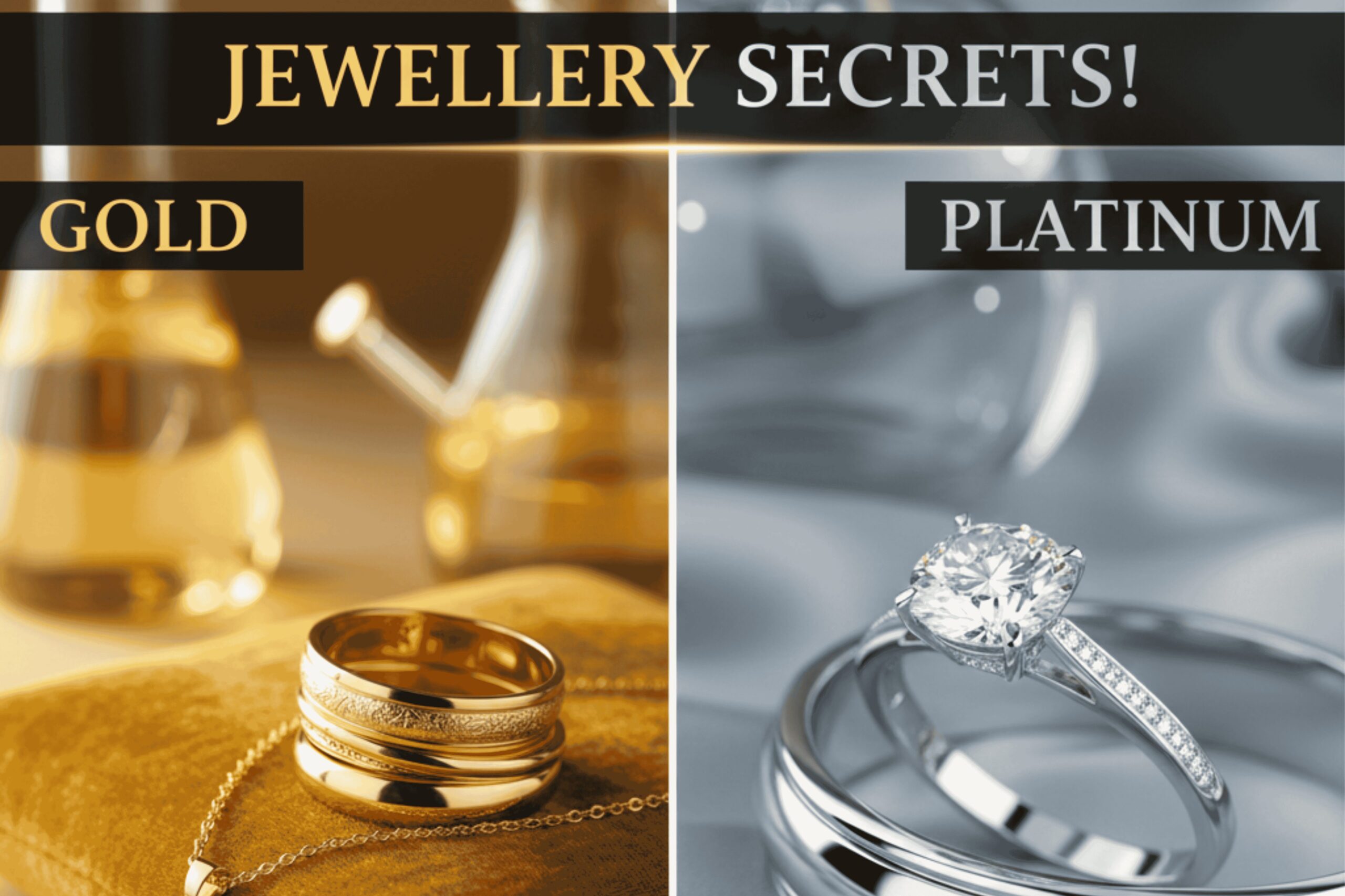
From the very beginning, a lot of materials have been experimented with to make jewellery, but most of them either become obsolete or fail to stand the test of time. However, two materials that not only stood the test of time but also evolved to be the best materials for making jewellery are gold and platinum. Even today, when jewellers around the world are experimenting with diverse materials like Titanium and alloys, these two seem to be unbeatable.
Now, you may wonder what exactly makes any material suitable for jewellery making, then, there are a lot of factors that have a role to play. Sturdiness is indeed one of the common factors which gold and platinum both have in common, but there are also other factors that come into play. Knowing about why these two metals are treated supremely will also help you understand better when you are making your investment.
We will dig deeper into this and will explain why are gold and platinum suitable for making jewellery.
Though both are preferred for making jewellery, we will analyse their properties and factors individually.
Why Is Gold Suitable for Making Jewellery?
From the very beginning, when the world was just starting to explore the art of jewellery making, gold was preferred. From being called the “God’s Materials” in certain regions to adorn the royal crowns, gold has been in existence for centuries now. Apart from their grand allure and exquisite beauty, there are plenty of reasons for it being a suitable material for jewellery making. Let’s go through all the reasons:
Doesn’t React Chemically
One of the most important features of gold that makes it highly suitable for making jewellery is its ability not to react with everything. Unlike most metals, gold doesn’t react chemically with moisture, air, and heat, making it repel rust and tarnish even when worn regularly for years. It also doesn’t react with skin and chemicals used on the body on a daily basis, like perfumes, lotions, soap, and others. This quality also saves people from investing regularly in its polishing because it doesn’t corrode or tarnish easily, adding to its longevity.
Eternal Beauty and Shine
Without a doubt, gold stands tall for its unmatched beauty and shine. It is naturally beautiful with a unique shade of colour and steals attention easily, and is enhanced further with the professional skills of intricate engraving and giving it a structure. Gold’s distinctive yellow hue was also compared with the sun’s qualities in ancient time, and over time, it was also mixed with different alloys to create different shades, including white and rose gold. Its versatility is such that it can heighten any precious gemstone’s worth, laced with gold.
Adaptability for Intricate Engravings
Gold is loved by the craftsman too because of its adaptability for making any type of intricate engraving and jewellery designs. Though a few metals offer the same, none match the level of malleability gold offers. It can easily be blended to make any shape and moulded to create delicate, intricate designs merging other precious and semi-precious stones. There are hardly any materials that have this level of malleability, so that one can even have long layered necklaces to small rings.
Symbol or Prestige and Wealth
Since gold has been associated with gods, kings, and royals, it is still seen as a symbol of prestige and wealth. Kings from India and ancient Egypt have vastly used gold to adorn their clothing and jewellery, which set up a deep-rooted symbol that continues to rule today. Even in some regions, gold is used in rituals, and certain religious practices heightening its value further. The piousness of gold is so high that it is even offered to gods, brides, and people on several occasions.
Financial Security and Investment
Unlike the majority of metals and precious stones, gold doesn’t lose its worth and instead, it’s increasing with time, making it an ideal investment option. Not recently, but gold has been an investment and financial security from ancient times and even today, it holds the same worth. When you buy gold, you also put a value as an investment for the time when economic uncertainty arises. While purchasing gold, you don’t feel guilty after spending a huge amount, as it will return you even better value.
Why Is Platinum Suitable for Making Jewellery?
If any other material matches the level of gold in jewellery making, it is platinum. Said to be thirty times rarer than gold, platinum is famous for its durability and luxurious look. Naturally white in shade, platinum and silver look almost similar, but the former doesn’t need any coating and stays the same for years. There are also a lot of reasons that make it an ideal material for jewellery making, like gold, that we will be discussing here:
Hypoallergenic Property
Very much like gold, platinum too has hypoallergenic properties, which make it ideal for people with highly sensitive skin to wear. As the platinum jewellery has 95% purity, it is less likely to trigger any sort of skin reactions, allergies, and breakouts and is considered a safe material to wear on the skin even when coming in direct touch. Even at times, low-karat gold jewellery contain nickel or other allergens, which may cause allergies or irritation, platinum’s core material is not compromised and stays naturally hypoallergenic.
Develops Patina
One of the distinctive features of platinum is that it does not get damaged or scratched easily, and rather it develops patina over time, which gives it its vintage look, making it even more beautiful. Patina is developed when the platinum finish and texture change with time, as additional texture replaces the original one. Even being a non-plated metal, platinum resists scratches, often being a preferred choice for rings and bracelets.
Highly-Durable
Platinum’s highly durable feature also makes it an ideal choice for jewellery making, which is also more durable than gold. It is made of 95% purity and offers the highest resistance to bending and scratching. It is also malleable in nature, which means that it can easily be bent to make diverse shapes without losing its core property, and intricate jewellery designs can easily be made out of it. Platinum also has a higher melting point, about 1700 degrees, making it not lose its structure even in high temperatures.
Cultural Significance
Just like gold, platinum too has a special place in ancient human history and culture. Though today it is being used in diverse industries, in ancient times, it was possessed and valued for its rarity and beauty. Mainly in South America and ancient Egypt, it was widely used as a decorative piece owing to its durability and ability to withstand time. Over time, it was being used in jewellery making and even earned a symbol of wealth and was made to hold precious gemstones, which continues even today.
Final Words
Though there are plenty of metals that have made their way to the market, gold and platinum continue to dominate. Their supreme quality, hypoallergenic properties, and durability make both of them suitable for jewellery making. There have been long-running traditions of gold and platinum being used in the making of jewellery from ancient times. We have covered almost every important thing regarding why are gold and platinum suitable for making jewellery.
FAQs
Why is gold used to make jewellery?
Gold is preferred for making jewellery because of its high-resistance property against tarnish and corrosion, hypoallergenic properties suitable for every type of skin, and malleability to be shaped into any design and intricate engravings.
Why are only a few metals suitable for making jewellery?
The reason why only a few metals are suitable for making jewellery is because of their resistance against corrosion and tarnish, high boiling point, durability, worth, and malleability.
Why is pure gold not used to make jewellery?
Pure gold is not used in making jewellery because it is too soft to be made into a shape, loses its shape easily and can easily be deformed. To make gold jewellery, an alloy is added.
Why are gold and silver used for electroplating jewellery?
Gold and silver are used for electroplating jewellery because they are aesthetically pleasing, add a tarnish-free coat and cost less than solid gold.
What is 22-carat gold, and why is it preferred for making jewellery?
22 carat gold contains about 92% pure gold and a mix of 8% percent of alloy and other metals mixed to solidify it enough to give it any shape and enhance its durability.